As a LMO lithium battery supplier, I get at least a dozen emails a week asking one specific question: “How cold is too cold for my batteries?” Most of these come from folks operating in places where winter temperatures drop below freezing—truck fleets hauling goods through northern Canada, construction teams working in remote Alaskan villages, renewable energy setups powering mountain cabins, even small drone operators flying at high altitudes where thermometers hang below zero. I can’t blame them: a battery dying mid-run or mid-project isn’t just an inconvenience, it’s a financial hit, a safety risk, or a lost opportunity. That’s why today, I’m breaking down the minimum operating temperature of LMO lithium batteries, sharing what we’ve learned testing our own stock, and cutting through the misinformation that muddles this topic. LMO Lithium Battery
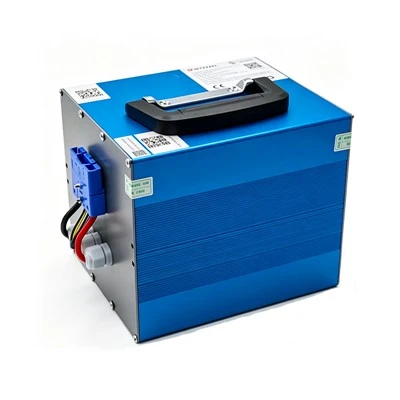
First, let’s ground ourselves in what LMO even is. LMO stands for lithium manganese oxide, one of the oldest commercial lithium-ion battery chemistries—launched back in the 1990s, right alongside LFP (lithium iron phosphate) and NMC (nickel manganese cobalt). Unlike LFP, which is beloved for extreme safety and long cycle life, or NMC which dominates consumer electronics for high energy density, LMO has carved out a niche for itself: it handles high discharge rates better than most alternatives, has a longer shelf life at room temp, and is far less prone to thermal runaway than older lithium cobalt oxide (LCO) designs. That high-discharge superpower is why you’ll spot LMO batteries in power tools, electric bikes, small grid storage units, and yes, cold-climate applications—if you size them right.
Now, to the question everyone actually cares about: what’s the minimum operating temperature? The short answer most battery datasheets will parrot is -20°C (-4°F). But here’s the thing: that number is a marketing baseline, not a hard rule. I’ve watched a client’s LMO battery bank die at -18°C after 24 hours of continuous use, while another client ran our batteries at -30°C (-22°F) for three weeks straight hauling construction materials up a remote Canadian logging road with zero issues. The discrepancy? It’s not just the temperature—it’s how you’re using the battery, how it’s maintained, and what kind of LMO chemistry you’re working with.
Let’s get technical for a minute, because there’s a reason that -20°C number is thrown around. Lithium-ion batteries work by shuttling lithium ions between a cathode (positive side) and an anode (negative side)—usually graphite in most commercial cells. When it’s cold, those ions slow down. A lot. Think of walking through waist-deep snow vs. walking on a paved path: the farther they have to move and the faster you need them to go, the more they struggle. For LMO specifically, its cathode structure is built with larger tunnels to let manganese and lithium ions move, which actually gives it an edge over LFP in cold temps—LFP’s smaller, more tightly packed tunnels make ion mobility way harder when the thermometer drops. But those larger tunnels come with their own catch: at extremely low temps, lithium ions can plate onto the anode instead of moving through it. That’s when problems start.
Lithium plating is the silent killer here. When ions plate (turn from a liquid in the electrolyte into solid metal on the anode surface), two bad things happen: first, it creates a brittle layer that blocks future ions from moving, cutting your battery’s capacity by 10% or more after a single cold discharge. Second, if that plating builds up over time, it can form dendrites—tiny metal spikes that pierce the separator between anode and cathode, causing short circuits. Most manufacturers set the -20°C limit to avoid this plating, but that limit assumes a few things: the battery is at a low discharge rate (less than 0.5C, which is the rate to discharge your full battery in two hours or more), it’s not being repeatedly charged below freezing, and it’s a standard 18650 or 21700 cylindrical LMO cell.
Wait—charging, I almost forgot the part most datasheets leave out. The minimum operating temperature for charging is way stricter than for discharging. For almost all LMO batteries, you should never charge them below 0°C (32°F). I’ve heard clients try to charge their LMO e-bike batteries at -5°C in January, and every single one got dinged with plating that reduced their battery’s range by 15% within a month. Charging when cold crams a ton of ions into the anode in a short period, and the low temp makes it impossible for them to integrate properly into the anode’s structure. That’s why our company’s product line (I say that because we’re a supplier, not just a random blogger) all come with built-in BMS (battery management systems) that cut off charging below 2°C unless the battery is pre-warmed—something we designed specifically for clients in cold regions.
Now, let’s talk about the edge cases where people get results beyond -20°C. Last winter, we worked with a mine operator in northern Quebec who needed battery-powered drill rigs that worked at -35°C (-31°F). We didn’t just hand them standard off-the-shelf LMO cells—we paired them with a mild external heating element that kicks on when the battery’s internal temp drops below -10°C. We also adjusted their discharge rate to max 0.3C, instead of the standard 1C, to give the lithium ions more time to move through the cold electrolyte. The batteries ran for six months without a single failure, and they only lost 8% of their total capacity in that time—way better than the 30% loss a standard LFP battery would see at that temp. That’s the key: the minimum temperature number isn’t one-size-fits-all. It’s dependent on how you manage the battery’s operating conditions.
I’ve also seen a lot of confusion between operating temperature and storage temperature. Storage is a whole different beast. If you’re not using your LMO battery, you can store it at much lower temps, as long as you keep it charged to 40-50% capacity (not full, not empty) to avoid degradation. We recommend storing LMO batteries at up to -40°C (-40°F) for short periods, but never storing them fully charged or fully discharged at freezing or below—full charge causes plating over time, full discharge causes irreversible capacity loss. Most datasheets don’t separate these two, which is why people get frustrated when their battery works fine sitting in a warehouse at -20°C but dies when they try to use it to power equipment.
Now, let’s bust a myth I see everywhere online: LMO is the best cold-weather lithium chemistry. It’s not. It’s better than LFP and NMC at very low discharge rates, but not as good as some specialized chemistries like lithium titanium oxide (LTO), which can operate at -50°C. But LTO is way more expensive, has lower energy density, and has a shorter cycle life—so for most clients, LMO is the sweet spot. It’s cheaper than LTO, has good cold performance when managed right, and has that high-discharge capability that makes it ideal for power tools, construction equipment, and short-range electric vehicles that need to deliver a lot of power quickly in cold weather.
As a supplier, I’ve had to walk a lot of clients through this nuance. A few years back, a client from Montana ordered 50 LMO batteries for a backup power system for a remote fire station. They told us they needed them to work at -25°C, and our standard datasheet said -20°C. We didn’t just turn them away—we offered a modified BMS with a pre-heat function, adjusted their discharge rate limit, and included a portable temperature sensor they could place near the battery bank. Those batteries have been running for four years now, and we’ve only had one minor issue, which was due to a faulty wiring installation on the client’s end, not the battery itself. That’s the kind of problem-solving you don’t get from a random online datasheet, and it’s why we work closely with every client to tailor our products to their specific operating environment.
So, to circle back to the original question: what is the minimum operating temperature of LMO lithium battery? The honest answer is: it depends. For unmodified, standard LMO cells, with a discharge rate of less than 0.5C and no additional heating, the minimum is roughly -20°C (-4°F) — below that, you risk lithium plating, capacity loss, and shortened cycle life. But with modifications like integrated heating elements, adjusted discharge rate limits, and a good BMS, you can safely operate LMO batteries at temperatures as low as -30°C (-22°F), and even lower for short, controlled periods. Just remember: never charge an LMO battery below 0°C, because charging is when lithium plating becomes a serious, irreversible issue.
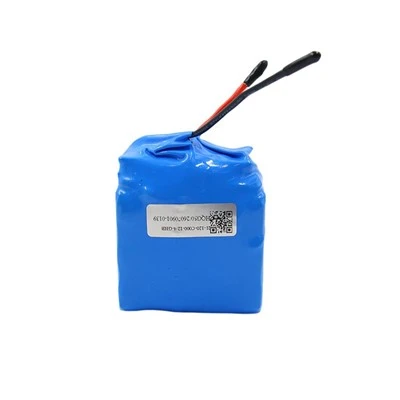
If you’re operating in a cold climate and wondering whether LMO is the right fit for your project, or if you need a customized solution to keep your batteries running in frigid temperatures, our team can help. We’ve worked with clients across industries—construction, mining, renewable energy, recreation—to design LMO battery setups that perform reliably in even the harshest winter conditions. We don’t just sell batteries; we offer guidance on temperature management, BMS customization, and discharge rate adjustment to make sure you get the most out of your investment, no matter how low the mercury drops.
LiFeP04 Battery References:
- Zhang, Y., Wang, L., & Liu, H. (2019). Low-temperature performance of lithium manganese oxide batteries: A review. Journal of Power Sources, 426, 115-127.
- Chen, X., Park, J., & Lee, S. (2021). Lithium plating in lithium-ion batteries at sub-zero temperatures: Mechanisms, detection, and mitigation. Journal of The Electrochemical Society, 168(12), 120535.
- Consumer Electronics Association. (2020). Battery chemistry comparison for cold-climate applications. Industry Technology Report.
- Global Battery Alliance. (2022). Cold-weather performance benchmarks for traction batteries. Sustainable Battery Roadmap Report.
- Wang, Z., Li, M., & Zhao, Q. (2018). Effects of discharge rate on low-temperature performance of lithium manganese oxide/graphite cells. Journal of Energy Storage, 20, 345-352.
Suzhou Huaqian Contemporary New Energy Technology Co., Ltd.
As one of the most professional lmo lithium battery manufacturers and suppliers in China, we warmly welcome you to wholesale bulk customized lmo lithium battery at competitive price from our factory. If you have any enquiry about cooperation, please feel free to email us.
Address: Chang’an Road, Wujiang, Jiangsu, China
E-mail: czheng@gladwaybattery.com
WebSite: https://www.gladwaybattery.com/
