If you’ve ever stood on a bustling port, watched a massive mining truck hauling tons of ore from a deep pit, or wondered how raw materials make their way from a factory’s loading yard to a processing plant across the country, there’s a good chance you’ve crossed paths with a steel cord conveyor belt. As a supplier who’s spent the last 12 years working closely with industries that rely on these belts, I’ve seen firsthand how this isn’t just another piece of conveyor equipment—it’s a workhorse that keeps entire operations running without missing a beat. A lot of folks reach out to me asking what sectors actually depend on steel cord conveyor belts, and why these belts are a cut above the fabric or plastic alternatives you might see in a grocery store or a small packaging warehouse. Let’s break down the industries that can’t function well without them, and why steel cord technology matters so much. Steel Cord Conveyor Belt
First, the heavyweight that got me into this business in the first place: mining. If there’s one industry that puts conveyor belts through the wringer, it’s mining. We’re talking about moving 100-ton loads of iron ore, copper, gold, coal, or even overburden—rock and dirt that’s stripped away to get to the valuable deposits beneath. These loads aren’t just heavy; they’re sharp, abrasive, and sometimes hot enough to warp weaker materials. A standard fabric conveyor belt might last a few months in a mine before fraying or tearing, but steel cord belts? We design those with multiple strands of high-tensile steel wire embedded in a rubber or synthetic core, giving them the tensile strength to pull thousands of tons of material per hour over miles of terrain, sometimes at steep angles or through rough terrain. I remember a client in Western Australia a few years back who runs an iron ore mine out in the Pilbara—they were using a fabric belt that kept snapping every six months, causing hours of downtime and costing them hundreds of thousands of dollars in lost production. We supplied them with a custom steel cord belt reinforced with extra thick rubber lagging to resist the sharp edges of their ore, and a year and a half later, they’re still running that same belt with no major issues. What makes steel cord perfect here is that it has far higher tensile strength per unit width than any other belt material, so you don’t need to add extra plies that add weight and cost. It also stands up to the extreme temperatures underground, where some mines run as hot as 120 degrees Fahrenheit from rock heat and machinery, which would make plastic belts brittle and crack.
Next up, ports and intermodal logistics hubs. Think of all the containers, bulk grain, and minerals that get shipped across oceans every year. Ports can’t afford to have their conveyor belts breaking down in the middle of loading a cargo ship—one delay can throw off an entire global supply chain. Steel cord belts are the go-to here because they can handle very high load capacities, long spans (some port conveyor systems stretch for a mile or more), and the constant back-and-forth movement of heavy cargo. At container terminals, you might not see them moving 40-ton shipping containers directly, but they’re critical for moving bulk materials like soybeans, coal, or iron ore from stockpiles to ships. I work with a port in the Gulf Coast that moves over 10 million tons of grain each year—they switched to steel cord belts from fabric belts five years ago, and their maintenance costs dropped by 40% because steel cord belts don’t stretch as much as fabric ones. Fabric belts will elongate over time, so operators have to adjust the tension every few weeks, which takes time and labor. Steel cord belts have almost zero permanent elongation, so you set the tension once and forget it for years. That’s a huge win for a port that runs 24/7 and can’t afford downtime. Another thing ports love is that steel cord belts can withstand outdoor conditions: rain, sun, salt air, and extreme temperatures. Fabric belts will rot or degrade if left outside in salt air, but the rubber coating on our steel cord belts is UV-resistant and has a high salt tolerance, so they last twice as long in coastal environments.
Then there’s the power generation industry, specifically coal-fired and thermal power plants. I know a lot of people talk about renewable energy these days, but coal still accounts for a large portion of global electricity generation, especially in emerging markets. Power plants need to move massive amounts of coal from storage yards to the boilers, sometimes over long distances and at high speeds. The problem here is that coal is abrasive, and the conveyor belts have to move it consistently—any delay means less electricity for thousands of homes. A few years ago, a power plant in Indiana reached out to me because their old fabric belts were tearing every few months from coal dust and sharp lumps. They were also dealing with frequent slippage, because fabric belts stretch and lose tension. We recommended a steel cord belt with a cleated surface to keep coal from sliding on steep inclines, and a high-wear rubber compound to resist abrasion. Now, their belts run at 150 tons per hour, with no major tears in three years. What’s more, power plants often handle hot materials—coal coming from the rail cars or storage piles can be up to 180 degrees Fahrenheit, and steel cord belts can handle that heat without deforming, whereas fabric belts would start to melt or weaken. Even as power plants shift to other fuels like biomass, steel cord belts work just as well for moving wood pellets, which are also abrasive and high-volume.
Another key industry: cement production. Cement manufacturing is a process that requires moving raw materials—limestone, clay, and gypsum—from quarries to the crushing and grinding stages, then moving the finished clinker (the intermediate product before cement) through kilns and storage. This is a harsh environment, with not just heavy, abrasive materials, but also extreme heat from the kilns, which can reach over 2,000 degrees Fahrenheit. Steel cord belts are the only conveyor belt that can handle both the heavy loads and the high heat. I worked with a cement plant in Mexico a few years back that was moving clinker 100 feet from the kiln to the cooling system. Their old belt was a heat-resistant fabric belt, but it was only lasting a year before the heat made it brittle. We supplied them with a steel cord belt with a special heat-resistant rubber coating that can withstand temperatures up to 300 degrees Fahrenheit continuously, and even short bursts of higher heat near the kiln. That belt is now in its fifth year of operation, and they haven’t had to replace it or repair any heat-related damage. Cement plants also run 24/7, 365 days a year—there’s no downtime for holidays, so they need conveyor belts that can keep up. Steel cord belts have the durability to handle that constant, heavy use, which is why almost all large cement plants around the world use them.
Now, let’s talk about the steel and metal processing industry. Whether it’s moving iron ore pellets to a steel mill, scrap metal to a recycling facility, or finished steel coils from a warehouse to a shipping dock, this industry needs conveyor belts that can handle extremely heavy loads and sharp, heavy materials. Scrap metal, for example, is not just heavy—it’s full of sharp edges, rusty pieces, and sometimes even chunks of concrete or other debris that would tear apart a fabric belt. I have a client that runs a large scrap recycling yard in Detroit; they process over 500,000 tons of scrap metal each year, moving it across 1,200 feet of conveyor lines. They were going through a new fabric belt every two months, which was costing them a fortune and slowing down their processing. When we switched them to a steel cord belt with a heavy-duty rubber cover reinforced with extra nylon plies, that belt lasted two years. The steel cord’s high tensile strength means it can support the weight of scrap metal loads that would snap a fabric belt, and the rubber cover is tough enough to resist tears from sharp metal edges. Even for steel mills, which move hot steel slabs and coils, steel cord belts with high heat resistance are used to transport materials between processing stages, because they can handle the weight and heat without failing.
Wait, but it’s not just the big heavy industries. I’ve also worked with large construction companies that use steel cord conveyor belts for temporary projects, like moving gravel and concrete on major road or building projects. When you’re doing a highway expansion that requires moving thousands of tons of gravel a day, a temporary conveyor belt needs to be strong enough to handle heavy loads, easy to install, and durable enough to last through the project. Steel cord belts are perfect here because they can be custom-sized for temporary use, and they don’t stretch, so they’re easy to set up without constant adjustments. Some construction teams even use steel cord belts to move excavated material from tunnel projects, which is another harsh environment with dirt, rock, and sometimes water that would degrade weaker belts.
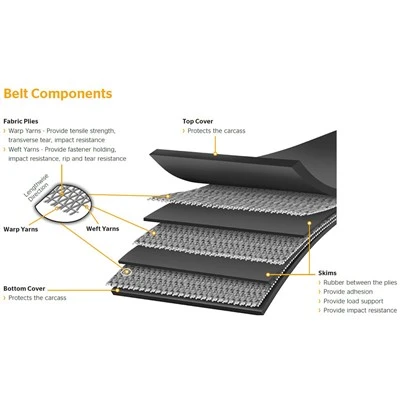
Now, let’s get into why steel cord conveyor belts are so much better than the alternatives in all these industries, because I think a lot of people don’t realize that it’s not just about strength. Fabric belts, which are made of nylon or polyester plies, are cheaper upfront, but they have lower tensile strength, so you can’t move as much weight per belt, and they stretch, which leads to more maintenance and downtime. Solid woven belts are another option, but they’re not as strong as steel cord. Steel cord belts, on the other hand, have steel strands that run along the length of the belt, giving them tensile strength that’s 5 to 10 times higher than fabric belts of the same width. That means you can use a narrower belt for the same load, saving on space and cost. They also have almost no permanent elongation, so once you set the tension, you don’t have to adjust it for years, which cuts down on labor costs. The rubber coating on steel cord belts is also formulated to resist abrasion, cuts, heat, and chemicals, which is critical for industries handling sharp ore, hot cement, or corrosive bulk materials.
I should also mention that there are customizations for every industry, which is what makes working with a good steel cord conveyor belt supplier so important. For mining, we can add impact cradles and extra thick rubber lagging to protect the belt from sharp rocks at loading points. For ports, we make belts that are UV-resistant and saltproof to handle coastal air. For power plants, we make heat-resistant belts that can handle hot coal or biomass. For cement plants, we offer belts that can withstand the extreme heat near kilns. No two industries have the same needs, and a one-size-fits-all belt won’t work— that’s why I always work closely with each client to assess their specific operation, load weight, material type, temperature, and environment to design a belt that will last.
I’ve seen too many operations that tried to save money by using cheaper belts, only to end up paying more in downtime, repairs, and replacement costs. Last year, a small mine in South America reached out to me after using a low-cost fabric belt that lasted only three months. They thought saving a few cents per foot would help their bottom line, but the downtime from frequent belt failures cost them over $2 million in lost production in a year. When they switched to our steel cord belt, their maintenance costs dropped by 70%, and they haven’t had a major belt failure in over a year. That’s the value of choosing the right conveyor belt for your industry.

If you’re in any of these industries—mining, ports and logistics, power generation, cement production, steel and metal processing, large construction, or even bulk material handling for agricultural commodities like grain or soybeans—steel cord conveyor belts are the reliable workhorse your operation needs. I’ve spent 12 years in this business, and I can tell you that there’s no substitute for a belt that can handle the toughest conditions, keep your operation running smoothly, and save you money in the long run. If you’re looking to upgrade your conveyor belts, or if you’re tired of frequent failures and downtime, I’d love to talk to you about your specific needs. We can assess your operation, answer any questions you have about steel cord conveyor belts, and help you find a solution that fits your budget and your goals. Don’t let a bad conveyor belt hold your operation back—reach out today to start a conversation.
Aramid Conveyor Belt References
- Steel Cord Conveyor Belt Application Guide. International Association of Elevator Engineers, 2021.
- Conveyor Belt Performance Standards for Bulk Material Handling. American Society of Mechanical Engineers, 2020.
- Durability of Conveyor Belts in Harsh Industrial Environments. Journal of Industrial Materials Handling, Vol. 18, No. 2, 2022.
- Mining Conveyor Belt Best Practices and Cost Analysis. International Council on Mining and Metals, 2021.
- Steel Cord vs. Fabric Conveyor Belt: A Comparative Analysis for Industrial Applications. Industrial Belt Technology Review, 2020.
Alumina Technology (Qingdao) New Materials Co., Ltd.
As one of the most professional steel cord conveyor belt manufacturers and suppliers in China, we also support customized service. With abundant experience, we warmly welcome you to buy steel cord conveyor belt for sale here and get quotation from our factory. For price consultation, contact us.
Address: No.448, Jiangshan South Road, Huangdao District, Qingdao City, Shandong Province
E-mail: Gloria.zhang@contitech.cn
WebSite: https://www.altechconveyorbelt.com/
