If you’ve ever spent time around diesel engines—whether on a construction job site, a shipping vessel, or a backup power generator—chances are you’ve heard of SDEC pistons. As someone who’s been a trusted supplier for SDEC components for over a decade, I get asked this question all the time: What exactly is an SDEC piston made of? It’s not a random mix of metals, and it’s not something you can find on a shelf at any local auto parts store. Every part of the piston, from the top ring land to the oil control groove, is engineered to handle the extreme conditions of heavy-duty diesel operation, and that careful engineering is why our customers rely on our pistons day in and day out. SDEC Piston
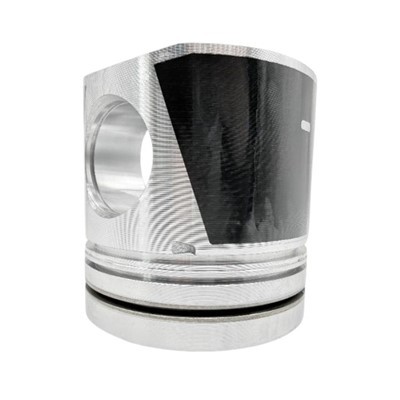
Let’s start with the big picture: SDEC pistons aren’t just one material. They’re a precision assembly, so we break down their composition by each critical component, because each part has a job that depends entirely on what it’s made of. The main piston body, that’s the part that moves up and down in the cylinder, is almost always a high-grade aluminum alloy. Wait, I know what some of you might be thinking—aluminum is soft, right? But not when it’s formulated for SDEC engines. Our primary piston material is what we call a eutectic aluminum-silicon alloy, usually with about 17 to 20 percent silicon by weight. Silicon is key here because it adds hardness and wear resistance without making the metal heavy. Heavy pistons are bad for diesel engines because they create more inertia, which increases fuel consumption and puts extra stress on the connecting rods and crankshaft. Aluminum cuts down on weight, but the silicon makes it tough enough to withstand the constant friction from the cylinder walls and the high pressure of combustion.
We don’t stop at aluminum and silicon, though. We add small amounts of other elements to tweak the alloy’s performance. Magnesium, for example, makes up about 1 to 1.5 percent of the alloy. Magnesium improves the tensile strength of the aluminum, so the piston won’t crack when it’s exposed to temperatures over 500 degrees Celsius during combustion. Copper is another common addition, usually around 0.5 to 1 percent. Copper enhances the heat transfer properties of the alloy, which is crucial because the piston has to get rid of the heat from the top of the combustion chamber fast. If heat builds up, the piston can expand too much, seize in the cylinder, or even melt a hole through the top. A little copper ensures heat flows away quickly, keeping the piston’s temperature balanced.
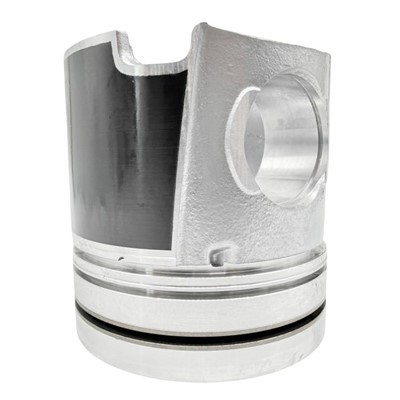
Now, let’s move to the parts that make the piston actually work with the rest of the engine. The ring grooves—those narrow channels near the top of the piston that hold the compression and oil control rings—are where we make a big exception to the aluminum rule. The top ring groove, which sits right at the edge of the combustion chamber, is under so much pressure and friction that we don’t use plain aluminum there. We line the top ring groove with a cast iron insert, and in some high-performance SDEC engines, we use a steel insert with a chrome coating. Iron is way harder than aluminum, so it resists wear from the metal ring that slides up and down thousands of times a minute. If the ring groove wears out, the piston can’t seal properly, compression leaks past, power drops, and oil starts getting into the combustion chamber. That’s a failure we work hard to prevent, so that insert is non-negotiable.
The second ring groove can also have a cast iron insert, though in some standard SDEC pistons, we machine the aluminum alloy to a tighter tolerance and apply a thin coating instead of an insert. The oil control ring grooves, lower down on the piston, are usually made from the same aluminum alloy, but they get a different coating to handle the constant scraping of oil off the cylinder walls. That coating is often molybdenum, or moly as we call it in the shop. Moly is a hard, slippery metal that reduces friction and wear, so the oil control ring does its job without wearing out the piston groove. It also helps with break-in when a new engine is first started, letting the ring and piston seat together smoothly without scuffing.
Next, the piston pin, the steel pin that connects the piston to the connecting rod, is another part with a specific composition. We use case-hardened carbon steel or alloy steel for these pins, usually with a carbon content of around 0.2 to 0.3 percent, plus small amounts of chromium and nickel. The pin has to be strong enough to handle the force of the piston hitting the crankshaft, but also hard on the surface to resist wear where it fits into the piston’s pin bosses. Case hardening means we heat the pin in a carbon-rich environment so the outer layer becomes hard, while the core stays tough and flexible. That way, it doesn’t snap under pressure, and it doesn’t wear out from rubbing in the pin holes.
Wait, I should mention the coatings too, because they’re part of the piston’s composition and play a huge role in how long it lasts. The piston’s skirt—the part of the piston that slides along the cylinder walls—gets a special anti-friction coating, usually made of tin or polymer like PTFE. This coating isn’t thick, just a few microns, but it eliminates metal-to-metal contact between the piston and the cylinder wall. If you didn’t have this coating, the aluminum piston would rub against the cast iron cylinder wall, cause friction, waste fuel, and wear out both parts fast. It also helps with cold starts, when metal parts are tight and haven’t heated up and expanded yet.
Now, you might be wondering, does this change for different SDEC piston models? The short answer is yes, because SDEC makes pistons for everything from small marine engines to heavy-duty construction equipment and power generators. For lower-load applications, like backup generators that only run a few hours a year, we might use a simpler aluminum alloy with a slightly lower silicon content, since wear isn’t as big of a concern. For high-load engines, like those in tugboats or quarry crushers that run 24/7, we use a higher silicon alloy, better ring groove inserts, and thicker anti-friction coatings to handle the constant stress. I’ve seen what happens when a piston is made with the wrong alloy for the job—once we replaced a batch of pistons that had been in a quarry crusher for 18 months, and the cheap pistons had so much ring groove wear that the engine was burning 10 liters of oil an hour. The SDEC pistons we use for that application? They still had less than 0.1mm of wear after 5 years of daily operation. That’s the difference between material engineering and cutting corners.
Let me also address a common misconception: some people think all aluminum pistons are the same. That’s not true. The alloy composition, the way it’s cast, the heat treatment process—all of that changes how the piston performs. For SDEC pistons, we use a gravity casting or low-pressure casting process, not the cheaper die casting that some overseas suppliers use. Low-pressure casting forces the molten alloy into the mold slowly and evenly, which eliminates air bubbles and weak spots in the metal. Air bubbles mean the piston can crack under combustion pressure, and weak spots lead to uneven expansion. After casting, we heat treat the piston to adjust its hardness and strength. That heat treatment is a closely guarded step in the process, because it’s what makes the alloy resist high temperatures without getting brittle.
As a supplier, I’ve spent years testing different materials to make sure every piston we sell meets SDEC’s exact specifications. Last year, we worked with SDEC’s engineering team to tweak the silicon content in a line of pistons for new marine engines. We found that increasing silicon by just 2 percent improved the piston’s wear resistance by 15 percent, which meant the engines could go 10,000 more hours between overhauls. That’s not a small number for a shipping vessel—every hour of operation costs money, so longer intervals between repairs mean more profit for our customers.
I also want to talk about why this matters to you, the end user. If you’re buying replacement pistons for your SDEC engine, you can’t just pick any piston that fits the bore size. The composition has to match the engine’s load, operating conditions, and year of manufacture. A piston that works for a 2018 SDEC generator won’t hold up in a 2022 SDEC construction engine, because the newer models run at higher pressures and temperatures. That’s why we don’t sell one-size-fits-all pistons—we match every piston to your specific engine model and application, because we know what’s in them and how they’ll perform.
I’ve been in this business long enough to know that when it comes to engine parts, reputation is everything. We’ve had customers come to us after a bad experience with cheap pistons from another supplier, where the piston seized 100 hours after installation. When we take apart those engines, the issue is almost always the material—low-quality aluminum alloy, thin ring groove inserts, and cheap coatings that wear out in weeks. SDEC pistons are engineered with a specific chemical makeup for a reason: to balance strength, weight, heat resistance, and wear, so your engine runs smoothly for thousands of hours.
If you’re in the market for SDEC pistons, whether you need replacements for routine maintenance or for a full engine rebuild, don’t gamble on parts made with subpar materials. We’ve got the expertise to tell you exactly what each piston is made of, why that composition is right for your engine, and how it will keep your equipment running longer. We work with fleets, construction companies, marine operators, and power plant providers, and we tailor every piston order to your exact needs. Stop guessing about what’s inside your pistons and start working with a supplier that knows SDEC pistons inside and out. Contact us today to discuss your requirements, get a quote, and make sure your next piston order is built to last.
Caterpillar Piston References
SDEC Engine Engineering Department. (2021). Material Specifications for Heavy-Duty Diesel Pistons. Shanghai Diesel Engine Co., Ltd.
American Foundry Society. (2019). Aluminum Silicon Alloys for High-Temperature Engine Components. AFS Transactions.
Society of Automotive Engineers (SAE). (2020). SAE J2494: Standard Test Method for Piston Ring Groove Wear Resistance. SAE International.
Hebei Yuwei Piston Co., Ltd.
As one of the most professional sdec piston manufacturers and suppliers in China, we’re featured by quality products and good service. Please rest assured to buy customized sdec piston made in China here from our factory. Also, quotation is available.
Address: Beizhujiacun Village, Sujiuzhuang Town, Ningjin County, Xingtai City, Hebei Province
E-mail: jack@ywpiston.com
WebSite: https://www.ywpiston.com/
