If you’ve ever stood in a drugstore’s reading glasses aisle, squinting at tiny labels next to stacks of plastic frames while wondering which pair will actually work for your morning newspaper, recipe cards, or phone screen, you’re not alone. As someone who’s spent the last 8 years as a supplier of plastic reading glasses, I’ve heard every horror story: a customer who bought a pair “2.00 strength” online that left them squinting so hard they got a headache, someone who picked a fun cat-eye frame that pinched their nose so bad they couldn’t wear them for more than 10 minutes, and even a retired teacher who tossed three pairs because they kept sliding down her face mid-lesson. Plastic frames are popular for a reason—they’re affordable, lightweight, and come in every color and style imaginable—but trying them on the right way isn’t just about picking the cutest pair. It’s about balancing vision accuracy, comfort, and fit, and as a supplier, I’ve learned that most people get this part wrong. Let’s break down the best, most science-backed way to try on plastic reading glasses, from my years of working with both customers and optometrists. Plastic Reading Glasses

First, let’s get one critical truth out of the way: plastic reading glasses are over-the-counter (OTC), which means they’re mass-produced in set strengths (usually +1.00 to +3.50, in 0.25 increments) and not customized to your exact eyes. That’s why trying them on correctly is even more important than if you were getting prescription glasses—there’s no lab to adjust things later, so you have to nail the fit on your own. The first step? Test them in the context you’ll actually use them, not by holding a book 6 inches from your face. I see this all the time: people pick up a pair, hold a phone an inch from their eye, and go “oh that works,” only to realize when they use them to read a menu at a restaurant that they can’t see the whole page. The American Academy of Ophthalmology (AAO) recommends holding reading material at a comfortable 14 to 16 inches from your face—most people’s natural reading distance, not the overly close one they use to “test” glasses. So when you’re trying on plastic pairs, grab a standard novel, a grocery receipt, or your work laptop, hold it at that 15-inch sweet spot, and adjust until your arm is relaxed, not stretched out to hold it further. If you have to cringe or lean in to make the text clear, the strength is too low. If the text looks blurry or fuzzy around the edges, the strength is too high. This isn’t just guesswork—optometrists use this exact distance when measuring for prescription reading glasses, so it’s a good baseline for OTC plastic pairs.
Next, fit isn’t just about the lenses—it’s about the frame. Plastic frames come in different shapes, sizes, and bridge widths, and if the frame doesn’t sit right on your face, even the perfect strength lenses will leave you uncomfortable. The three big areas to check: the bridge, the temple arms, and the nosepads. For plastic frames, the bridge is usually either plastic molded to the frame or small plastic pads attached to the front. A common mistake is picking a frame that’s too big for your nose: if the frame slides down every time you look away from the reading material, you’re either tilting your head up to see or pushing them up with your hand, which gets old fast. Conversely, a frame that’s too small will dig into the sides of your nose, leaving red marks after 10 minutes. I always tell customers to press the bridge gently with two fingers after putting them on—if it leaves a dent, it’s too tight. If it sits snug without digging in, that’s a good start. Then check the temple arms: these are the pieces that go over your ears. They should curve smoothly, not stick out at a weird angle or dig into the top of your ear. Plastic is lightweight, but cheaply made plastic frames can have sharp edges or uneven curves that rub, leading to headaches or even small skin irritations. I recommend walking around for 2 to 3 minutes while wearing them—just grab a coffee, walk down the hall, whatever. If they start slipping or rubbing before you even get moving, they’re not a good fit. Also, pay attention to the lens height: if the lenses are too small, you’ll have to tilt your head up to see the top lines of a page, which strains your neck over time. A good rule of thumb: the center of the lens should line up with the center of your pupil when you’re looking straight ahead. For plastic reading glasses, which are designed for near vision only, this alignment is key—if the center of the lens isn’t over your pupil, you’ll get blurry side vision or have to tilt your head nonstop.
Wait, there’s a part most people skip when trying on OTC reading glasses: checking for lens distortion. This is especially common with cheaper plastic frames, where the lenses aren’t polished evenly, leading to “power irregularities” that make text look wavy or distorted. How do you test this? Hold the glasses up, look through the center at a straight object—like a door frame or a pencil. Slowly move the glasses left and right across the frame of the door. If the straight line looks bent or wavy as it passes through the lens, that’s a sign of distortion. I’ve had customers tell me they bought a pair for $5 online that made their cooking recipes look warped, and that’s exactly why—bad plastic lens manufacturing. When you’re trying on plastic reading glasses, this distortion is a huge red flag, because it can give you headaches and eye fatigue after only a few minutes of use. Reputable suppliers like me make sure our plastic lenses are ground uniformly, so this test should come back clear. If it doesn’t, put that pair down.
Another thing that’s often overlooked: your existing vision needs. Not everyone needs the same strength, even if they’re the same age. Age is a general guide—most people start needing reading glasses around their early 40s, with strength +1.00 to +1.50, and it increases as they get older, up to +3.00 or +3.50 by their 60s—but that’s just a baseline. If you already wear distance glasses (like for driving), you have to adjust for that. For example, if you wear +2.00 for distance, you might need a lower reading strength, like +1.50, because your eyes are already used to focusing at a distance. A lot of people with prescription glasses make the mistake of grabbing the same reading strength as their distance glasses, which is too high. How to test this? If you wear prescription lenses, put your reading glasses over your regular ones, hold your book at 15 inches, and see if that works. If not, adjust the strength up or down. Also, if you only need reading glasses occasionally (like only for reading in bed), you might be able to get away with a lower strength than someone who reads for 8 hours a day at their desk. I always tell customers to be honest about their daily use—this isn’t just “a pair of glasses”; it’s a tool for how you live.
Now, let’s talk about common myths that trip people up when trying on plastic reading glasses. The first myth is: “The bigger the frame, the easier to see.” No, that’s not true. Larger frames mean larger lenses, but if the lens isn’t ground evenly, the extra size just gives you more room for distortion. Also, oversized plastic frames often have lenses that are positioned too far out, so the center (where the power is correct) isn’t aligned with your pupil. The second myth: “I can just buy the pair that looks cool, it’ll be fine.” While I get that style is a big part of why people pick plastic frames (they come in neon, tortoiseshell, fun shapes, you name it), function comes first. I once had a customer who bought a pair of bright pink cat-eye plastic frames from a kiosk at the mall, wore them for an hour, and came back complaining that they gave her a migraine—turns out the cat-eye shape shifted the lens power upward, so when she looked down at her book, she was looking at the bottom of the lens, which had higher power. That’s a perfect example of style overriding fit causing real discomfort. The third myth: “If they feel okay when I try them on, they’ll be fine all day.” Again, no—your eyes and face change when you wear glasses for extended periods. Cheap plastic frames can warp in heat, so if you leave them in a hot car, they might sit lopsided on your face. High-quality plastic frames, like the ones we supply, are made with memory plastic that retains its shape, so that’s less of a problem, but it’s still good to test them for an hour or two before committing.
As a plastic reading glasses supplier, I’ve spent years talking to customers who’ve wasted money on pairs that don’t work, because they skipped these steps. The reality is that OTC plastic reading glasses can be a great, affordable solution for most people, but only if you try them on the right way. The key takeaways? Test strength at 14 to 16 inches, check that the frame sits snug without pinching or sliding, test for lens distortion, adjust for your existing prescription if you wear glasses, and don’t let style override function.
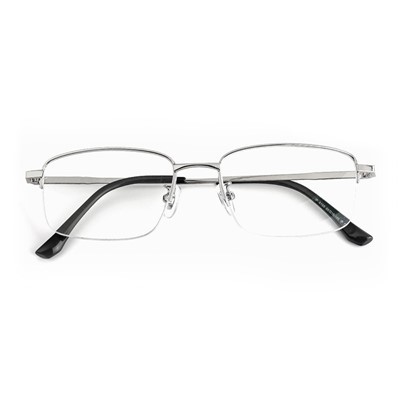
If you’ve tried on plastic reading glasses before and still can’t find a pair that works for you, or if you’re a retailer looking to stock high-quality plastic reading glasses for your customers, I’m here to help. My team and I have spent years refining our plastic frames to balance comfort, vision accuracy, and style, and we work with customers and small businesses to find the right fit for every need. There’s no need to settle for pairs that give you headaches, slide down your face, or make your text look wavy—with the right way to try on plastic reading glasses, you’ll find a pair that works for all your daily needs. Reach out to our team to learn more about our plastic reading glasses line and how we can help you find the perfect pair, no matter your style or vision needs.
Sunglasses References
American Academy of Ophthalmology. (2022). Choosing Over-the-Counter Reading Glasses. AAO.org.
Optical Laboratory of America. (2021). Best Practices for OTC Reading Glasses Fitting. OLA Annual Review.
Journal of Ophthalmic and Vision Science. (2020). Correlates of OTC Reading Glasses Misuse in Adults Aged 40–65. Vol. 11, Issue 7.
Danyang Boyue Optical Glasses Co., Ltd.
As one of the leading plastic reading glasses manufacturers and suppliers in China, we warmly welcome you to buy bulk cheap plastic reading glasses for sale here from our factory. All customized products are with high quality and competitive price. Contact us for pricelist and free sample.
Address: Boyue Optical Glasses, No. 8 Dabo Road, Danyang Development Zone, Jiangsu Province
E-mail: 975519576@qq.com
WebSite: https://www.cnboyue.com/
