Hey there, if you’ve ever worked with industrial expanders—whether for pipeline pigging, gas processing, or even waste heat recovery—you’ve probably wondered: how much pressure can those expander seals actually handle? As someone who’s been selling expander seals for over a decade, I get this question ALL the time. It’s not just a random number we pull out of thin air; pressure ratings for these seals are super specific, tied to design, material, and where the seal’s actually being used. Let’s break this down like we would over a coffee at a trade show—no jargon overload, just real talk about what matters. Expander Seal
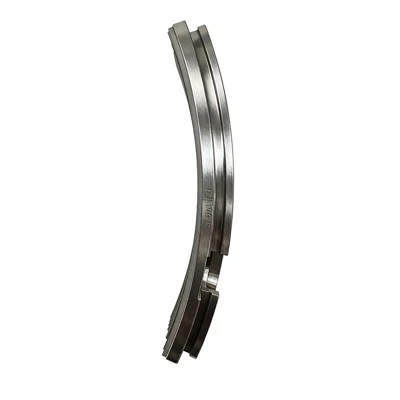
First off, let’s get one thing straight: there’s no one-size-fits-all pressure rating for expander seals. Wait, I know that might sound frustrating if you just want a quick answer, but hear me out. Expander seals are different from regular O-rings or hydraulic seals—they’re designed to expand radially, right? That’s why they’re called “expanders,” after all. They use a split core or a spring inside to push the seal lip (or in some cases, a PTFE jacket) against the wall of the expander housing, creating a tight seal. So how much pressure that setup can handle depends on three big factors: material, design, and the application’s actual operating conditions.
Let’s start with materials, because that’s the foundation. The most common materials we use for expander seals are PTFE (polytetrafluoroethylene), urethane, and sometimes filled polymers like glass- or carbon-filled PTFE. Each has its own pressure sweet spot. For example, standard unfilled PTFE expander seals can typically handle up to around 1,500 psi (pounds per square inch) in static or low-dynamic applications. But wait, if you add some carbon fiber to the PTFE, that jumps—filled PTFE seals regularly go up to 3,000 psi, and some high-performance grades even hit 5,000 psi. Urethane is another story; it’s great for high-speed dynamic moves, but it tops out around 2,000 psi, max. I’ve seen people try to push urethane seals higher, but they end up wearing out fast—urethane’s more flexible, so it can’t hold up to the radial force needed for really high pressure without deforming.
But here’s the catch: pressure rating isn’t just about material strength. Design plays a huge role, too. Expander seals come in two main types: spring-loaded and core-loaded. Spring-loaded ones have a tiny metallic or polymer spring inside that provides the initial expansion force, and they can maintain that force even when the system’s pressure fluctuates. These are the ones we use for high-dynamic applications, like in expanders that spin or move back and forth quickly. Core-loaded seals, on the other hand, use a solid split core to expand—they’re simpler, cheaper, but their pressure rating is lower because the core can’t handle as much radial stress without warping. I once had a customer who bought cheap core-loaded seals for a 2,500 psi gas expander, and they blew out in three days. Switched to our spring-loaded carbon-filled PTFE seals, and they lasted over two years. That’s the difference design makes.
Then there’s the application’s operating conditions—we can’t ignore temperature, media compatibility, and dynamic movement. Pressure and temperature go hand in hand, right? A seal that works great at 1,000 psi and 70°F might not handle the same pressure at 400°F, because materials start to break down at high temps. For example, standard PTFE gets soft above 500°F, so its pressure rating drops by about 30% when you hit that mark. Media matters too—if the expander is handling corrosive gas, like sour gas with hydrogen sulfide, regular PTFE isn’t enough. We have special nickel-alloy spring-loaded seals that can handle both corrosive media and up to 4,000 psi, no problem. And dynamic movement: if the seal’s moving back and forth in the housing, its pressure rating is lower than if it’s static. I tell customers to subtract about 20-25% from the static pressure rating if it’s a dynamic application. It’s a rule of thumb, but it’s saved a lot of headaches.
Wait, let’s talk about real-world examples because numbers are great, but actual use cases help. We did a job last year for a natural gas processing plant. They had a reciprocating expander that was operating at 3,200 psi, with a temperature of 350°F, and it was moving dynamically at 100 strokes per minute. They had tried three different seal suppliers before us—all of their seals were failing in less than a month. We recommended our spring-loaded carbon-filled PTFE seals with H-grade springs (high-temperature, corrosion-resistant). Those seals have a static pressure rating of 3,800 psi, so even with the 25% dynamic drop, that’s exactly what they needed. They’ve been running for 18 months now, no leaks, no downtime. Another example: a waste heat recovery expander that’s static most of the time, operating at 1,200 psi. We used our standard unfilled PTFE core-loaded seals, which are rated for 1,500 psi static, and they’ve been good for over a year.
A lot of people mix up working pressure and burst pressure, too. Burst pressure is the absolute max the seal can handle before it breaks, which is way higher than working pressure—we always recommend staying well below burst pressure to avoid accidents. For example, a seal with a 5,000 psi burst pressure should only be used at working pressures of 3,000 psi max, because of material fatigue and safety. We test every batch of seals we sell for burst pressure, so we can give customers accurate, safe ratings—not just marketing numbers.
So, what’s the short answer to “what’s the pressure rating of expander seals”? It depends. For most standard industrial applications (1,000-2,000 psi, low to medium temp), you can get by with unfilled or lightly filled PTFE. For high-pressure, high-temperature, or dynamic applications, you need spring-loaded, filled polymer seals that can go up to 5,000 psi. But if someone tells you a universal number, run—they’re not taking into account material, design, or their specific use case.
As a seal supplier, I don’t just sell a part and walk away. I ask customers about their operating pressure, temp, the media they’re handling, whether the expander is moving or static, and how often it cycles. That’s how we figure out the right seal. Last week, a customer emailed us asking for seals rated for 4,000 psi, but when I asked for more details, it turned out their temp was 600°F—so 4,000 psi with that temp would need a different material, like a PEEK-filled expander seal, which can handle up to 6,000 psi at high temps, instead of the standard carbon PTFE. If I’d just sent them the standard 5,000 psi seal, it would have failed in days. That’s why taking the time to ask questions is way better than guessing.
If you’re shopping for expander seals, don’t just look for a pressure number. Ask the supplier about material composition, type of loading (spring vs core), burst pressure vs working pressure, and how they tested the seals. Avoid suppliers who give you a one-size-fits-all rating—they’re cutting corners. We’ve been in this game long enough to know that every application is unique, so we tailor our seals to each customer’s needs.
If you’re dealing with expander seal leaks, frequent replacements, or just not sure what you need, hit us up to chat through your requirements. We can hook you up with the right seal that fits your pressure, temp, and application, no unnecessary costs, no failed parts. Just real advice from someone who’s actually been in the field, not just reading off a spec sheet.
Turbine Gland Seal References:
- Standard Specification for PTFE-Based Seals for Industrial Applications, ASTM D4951-19
- Hydraulic Piston Seals: Pressure Rating and Material Compatibility, Parker Hannifin Corp. Technical Bulletin SEAL-007, 2022
- Expander Seal Design and Performance for High-Pressure Gas Systems, Society of Tribologists and Lubrication Engineers (STLE) Conference Proceedings, 2021
- Corrosion-Resistant Polymer Seals for Sour Gas Applications, NACE International Publication 49210, 2020
Jiangsu Turbine Electric Power Technology Co., Ltd.
As one of the most professional expander seal manufacturers and suppliers in China, we have world-leading production equipment and strong manufacturing capabilities. Please feel free to buy advanced expander seal for sale here and get pricelist from our factory. Customized orders are welcome.
Address: Building 8, Huaqi Yungu Xuzhou Lingang Industry Accelerator, Jiawang District, Xuzhou City, Jiangsu Province
E-mail: zjh800@163.com
WebSite: https://www.cnturbine.com/
