Yo! I’m a supplier in the low-voltage transformer game. You might be wondering, "What’s the frequency range of a low-voltage transformer?" Well, let’s dig into it. Low-voltage Transformer
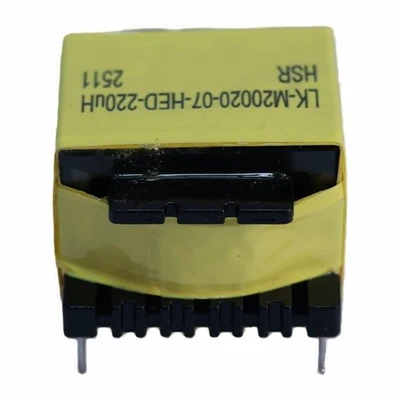
First off, low-voltage transformers are super important in a bunch of electrical systems. They’re used to step down high voltages to lower, safer voltages that can be used in various devices. And the frequency range of these transformers is a key factor that can really affect how they work.
Most low-voltage transformers are designed to work within a specific frequency range. The standard frequency for power systems around the world is either 50 Hz or 60 Hz. In many parts of Europe, Asia, and Africa, 50 Hz is the norm, while in North America and some other regions, 60 Hz is used. So, a lot of low-voltage transformers are built to operate efficiently at these frequencies.
For example, if you’re dealing with a transformer that’s supposed to work on a 50 Hz system and you try to use it in a 60 Hz system, it might not work as well. The transformer’s core and windings are designed to handle the magnetic flux changes that occur at a specific frequency. When you change the frequency, the magnetic flux behavior can change, which can lead to things like increased losses, overheating, and reduced efficiency.
But it’s not just about these standard frequencies. There are also applications where low-voltage transformers need to work at other frequencies. In some industrial processes, like in certain types of heating and control systems, you might need transformers that can operate at higher frequencies, say, from a few hundred Hz up to several kHz. These high-frequency transformers are designed differently because the physics of magnetic fields and electrical currents changes at higher frequencies.
For instance, at high frequencies, the skin effect becomes more significant. The skin effect means that the current tends to flow more on the outer surface of the conductor rather than evenly throughout it. So, for high-frequency transformers, the conductors might be made in different shapes or use special materials to reduce the impact of the skin effect and keep the losses down.
On the other hand, there are also situations where you might need low-voltage transformers to work at lower frequencies. In some renewable energy systems, like small wind turbines or micro-hydro generators, the output frequency can be variable and might be lower than the standard 50 or 60 Hz. Transformers used in these systems need to be able to handle these lower frequencies without losing too much efficiency.
Now, as a low-voltage transformer supplier, I’ve seen a wide range of needs from different customers. Some just need a basic transformer for a simple electrical appliance, like a small power adapter for a phone charger. These usually operate at the standard frequency and are relatively easy to design and manufacture.
But then there are customers in more specialized industries, like aerospace or telecommunications. They need transformers that can work at very specific frequencies and have very strict performance requirements. For these customers, we have to do a lot of custom design and testing to make sure the transformers meet their needs.
When we design a low-voltage transformer, we start by looking at the frequency range. This helps us determine the right type of core material to use. Different core materials have different magnetic properties at different frequencies. For example, silicon steel is a common core material for transformers operating at standard 50 or 60 Hz frequencies. It has good magnetic properties and is relatively inexpensive.
But for high-frequency applications, we might use materials like ferrite. Ferrite cores have lower losses at high frequencies and can handle the rapid changes in magnetic flux better. They’re also lighter and smaller, which is a big advantage in applications where space is limited.
Another thing we consider when dealing with the frequency range is the winding design. The number of turns in the windings, the gauge of the wire, and how the windings are arranged all affect how the transformer performs at different frequencies. For high-frequency transformers, the windings might be made with thinner wires to reduce the skin effect.
We also pay close attention to the insulation in the transformer. At different frequencies, the electrical stress on the insulation can vary. So, we need to choose the right insulation materials and design the insulation system in a way that can handle the electrical stresses at the specific frequency range of the transformer.
In our experience, it’s really important for customers to tell us about the frequency requirements upfront. This way, we can make sure we design and build the right transformer for their application. If a customer doesn’t provide this information, we might end up with a transformer that doesn’t work as well as they need it to.
So, if you’re in the market for a low-voltage transformer, whether it’s for a simple home appliance or a complex industrial system, make sure you know your frequency requirements. And if you have any questions or need help figuring out what kind of transformer you need, don’t hesitate to reach out. We’re here to help you get the right transformer that will work efficiently and reliably in your system.
If you’re interested in purchasing low-voltage transformers or want to have a chat about your specific needs, just drop us a line. We’re always happy to talk about how we can meet your requirements and provide you with the best possible solution.
Low-voltage Transformer References:
- Electrical Engineering Handbook, various editions
- Transformer Design and Application textbooks
Dongguan Hensiron Electric Co., Ltd.
As one of the most professional low-voltage transformer suppliers in China, we have world-leading production equipment and strong manufacturing capabilities. Please feel free to buy high quality low-voltage transformer made in China here from our factory. Customized orders are welcome.
Address: Building 4, Xinxing Industrial Zone, Wangao Road, Wanjiang Street, Dongguan City, China
E-mail: jessica@dghensiron.com
WebSite: https://www.dghensiron.com/
