What is the diffraction order of Seya – Namioka Flat – Field Concave Holographic Grating?
As a supplier of Seya – Namioka Flat – Field Concave Holographic Gratings, I’ve been frequently asked about the diffraction order of these remarkable optical components. In this blog post, I’ll delve into the concept of diffraction order, its significance in the context of Seya – Namioka gratings, and how it impacts their performance and applications. Seya-Namioka Flat-Field Concave Holographic Grating
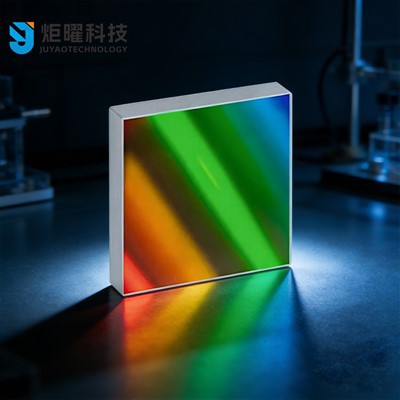
Understanding Diffraction and Diffraction Order
Diffraction is a fundamental optical phenomenon that occurs when light encounters an obstacle or a periodic structure, such as a grating. When light passes through or reflects off a grating, it is split into multiple beams that travel in different directions. These beams are known as diffracted orders.
The diffraction order is an integer value that represents the angular deviation of a diffracted beam from the incident beam. The zeroth – order diffraction corresponds to the beam that travels in the same direction as the incident beam, as if the grating had no effect on the light. The first – order diffraction (m = ± 1) is the beam that is deviated by the smallest angle from the zeroth order, followed by the second – order (m = ± 2), third – order (m = ± 3), and so on. The positive and negative signs indicate the direction of the deviation on either side of the zeroth order.
The general formula for the diffraction grating equation is given by (d(\sin\theta_{i}+\sin\theta_{m}) = m\lambda), where (d) is the grating constant (the distance between adjacent grooves on the grating), (\theta_{i}) is the angle of incidence of the light on the grating, (\theta_{m}) is the angle of diffraction of the (m) – th order, (\lambda) is the wavelength of the light, and (m) is the diffraction order.
Significance of Diffraction Order in Seya – Namioka Flat – Field Concave Holographic Gratings
Seya – Namioka flat – field concave holographic gratings are designed to provide a flat focal field for a specific range of wavelengths and diffraction orders. This unique property makes them highly suitable for use in spectrometers and other optical instruments where a flat image plane is required.
The choice of diffraction order is crucial in determining the performance of a Seya – Namioka grating. Different diffraction orders offer different levels of spectral resolution, dispersion, and efficiency.
- Spectral Resolution: The spectral resolution of a spectrometer is defined as its ability to distinguish between two closely spaced wavelengths. In general, higher diffraction orders provide better spectral resolution. This is because the angular separation between two wavelengths (\lambda_{1}) and (\lambda_{2}) increases with the diffraction order (m). However, higher orders also tend to have lower efficiency, so a balance must be struck between resolution and efficiency.
- Dispersion: Dispersion refers to the angular separation of different wavelengths within a given diffraction order. The angular dispersion (D=\frac{d\theta_{m}}{d\lambda}=\frac{m}{d\cos\theta_{m}}). Higher diffraction orders result in higher dispersion, which means that the different wavelengths are spread out more widely on the detector. This can be beneficial in applications where fine – scale spectral analysis is required.
- Efficiency: The diffraction efficiency of a grating is the ratio of the diffracted power in a particular order to the incident power. The efficiency of a Seya – Namioka grating varies with the diffraction order, wavelength, and angle of incidence. The zeroth – order diffraction usually has the highest efficiency, but it does not provide any spectral information. The first – order diffraction is often the most commonly used order because it offers a good balance between efficiency and spectral performance.
Applications and Diffraction Order Selection
The choice of diffraction order depends on the specific application of the Seya – Namioka grating. Here are some common applications and the typical diffraction orders used:
- Atomic Emission Spectroscopy: In atomic emission spectroscopy, the goal is to detect and measure the emission lines of atoms. First – order diffraction is often used because it provides a good balance between resolution and efficiency. The emission lines are typically well – separated in the first order, and the detector can collect a sufficient amount of light for accurate measurement.
- Raman Spectroscopy: Raman spectroscopy is used to analyze the vibrational modes of molecules. Higher diffraction orders may be preferred in Raman spectroscopy to achieve higher spectral resolution. This is because Raman spectra often contain closely spaced peaks that need to be resolved for accurate analysis.
- UV – Visible Spectroscopy: In UV – visible spectroscopy, the first – order diffraction is commonly used for general – purpose applications. It provides a wide spectral range and sufficient resolution for most analytical tasks. However, in some cases where higher resolution is required, higher orders may be considered.
Factors Affecting the Diffraction Order Performance of Seya – Namioka Gratings
Several factors can affect the performance of a Seya – Namioka grating in a particular diffraction order.
- Grating Design: The design of the grating, including the groove profile, groove density, and holographic recording process, can have a significant impact on the diffraction efficiency and performance in different orders. Our company uses advanced holographic techniques to optimize the grating design for specific applications and diffraction orders.
- Wavelength Range: The performance of a grating in a given diffraction order can vary depending on the wavelength range of interest. Different materials and coating technologies are used to ensure high efficiency and performance across a wide range of wavelengths.
- Angle of Incidence: The angle of incidence of the light on the grating affects the diffraction angles and efficiency of different orders. The Seya – Namioka configuration is designed to optimize the performance at a specific angle of incidence and for a particular range of diffraction orders.
Conclusion
In conclusion, the diffraction order of a Seya – Namioka flat – field concave holographic grating is a critical parameter that affects its spectral resolution, dispersion, and efficiency. Understanding the concept of diffraction order and its significance in the context of Seya – Namioka gratings is essential for selecting the right grating for a specific application.

As a trusted supplier of Seya – Namioka Flat – Field Concave Holographic Gratings, we have the expertise and experience to help you choose the optimal grating with the right diffraction order for your needs. Whether you are working on atomic emission spectroscopy, Raman spectroscopy, or UV – visible spectroscopy, our high – quality gratings can provide the performance and reliability you require.
Echelle Grating If you are interested in learning more about our Seya – Namioka Flat – Field Concave Holographic Gratings or would like to discuss your specific requirements for a particular diffraction order, please don’t hesitate to contact us. We look forward to working with you to provide the best optical solutions for your applications.
References
- Born, M., & Wolf, E. (1999). Principles of Optics: Electromagnetic Theory of Propagation, Interference and Diffraction of Light. Cambridge University Press.
- Palmer, C. (1991). Optical Gratings and Applications. Marcel Dekker.
- Chase, M.R., & Madden, M.P. (2002). Handbook of Spectroscopy, Volume 2: Applications of Spectroscopy. CRC Press.
Jilin Juyao Technology Co., Ltd.
As one of the leading seya-namioka flat-field concave holographic grating manufacturers and suppliers in China, we offer a wide range of products with superior quality. Please feel free to wholesale customized seya-namioka flat-field concave holographic grating from our factory. Welcome to view our website for more information.
Address: Room 101, No. 2 Huiwen Road, Nanguan District, Changchun City, Jilin Province, China
E-mail: jyoptix@outlook.com
WebSite: https://www.jyoptix.com/
