As a seasoned provider in the Molded Case Circuit Breaker (MCCB) industry, I’ve encountered numerous inquiries from clients about the disparities between MCCBs and isolators. In this blog post, I aim to shed light on these differences, helping electricians, engineers, and industry enthusiasts make informed decisions for their electrical systems. Molded Case Circuit Breaker
Functionality and Basic Purpose
MCCBs and isolators serve distinct but complementary roles in electrical circuits. An MCCB is primarily a protective device. Its main function is to automatically interrupt the electrical circuit when it detects an over – current situation, such as overloads or short – circuits. Overloads occur when the current flowing through the circuit exceeds its normal capacity for an extended period. Short – circuits, on the other hand, are sudden, high – current events that can cause significant damage to electrical equipment and pose safety hazards.
For instance, in an industrial setting where large machinery is used, an MCCB can protect the equipment from damage by cutting off the power as soon as it senses a dangerous current level. It acts as a safeguard against electrical fires, equipment breakdowns, and potential harm to personnel.
On the contrary, an isolator is mainly used for isolation purposes. Its sole responsibility is to provide a visible break in the electrical circuit. This is crucial for maintenance and repair work on electrical systems. When technicians need to work on a circuit, they can use an isolator to disconnect the power supply safely, ensuring that no current is flowing through the section of the circuit they are working on. It is like creating a no – current zone within the larger electrical network, allowing for safe manual intervention.
Construction and Design
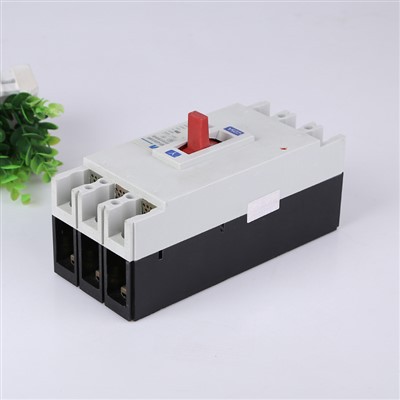
The construction of MCCBs is quite complex, designed to handle the various electrical phenomena they are meant to protect against. They typically consist of a molded case made of insulating materials, hence the name. Inside the case, there are thermal and magnetic trip units. The thermal trip unit responds to long – term overloads by using the heat generated by excessive current to actuate a bimetallic strip. As the strip heats up, it bends and eventually triggers the breaker to trip.
The magnetic trip unit, on the other hand, responds to short – circuit currents. These high – magnitude currents create a strong magnetic field that quickly drives a plunger or solenoid, causing the breaker to open almost instantaneously. Additionally, MCCBs are often equipped with adjustable settings, allowing users to customize the trip characteristics according to the specific requirements of their electrical circuits.
Isolators, in comparison, have a simpler design. They are usually made up of a set of contacts that can be opened or closed manually. The contacts are designed to withstand the normal operating current of the circuit without overheating but do not have the complex trip mechanisms found in MCCBs. The key feature of an isolator’s design is the ability to provide a clear visual indication of whether the circuit is open or closed. This is often achieved through a visible blade or a position indicator on the switch.
Operational Characteristics
MCCBs are designed to operate automatically in response to abnormal electrical conditions. Once the current exceeds the pre – set trip threshold, the breaker will trip and interrupt the circuit within a fraction of a second in the case of a short – circuit or within a few seconds to minutes for an overload, depending on the severity of the over – current. After tripping, the MCCB can usually be reset manually, restoring power to the circuit once the fault has been cleared.
However, isolators are always operated manually. They are not intended to respond to over – currents or short – circuits. Instead, they are used to make or break the connection in a circuit under normal operating conditions. For example, in a power distribution panel, an isolator can be used to isolate a particular feeder circuit before starting maintenance work. It should never be used to interrupt a fault current because it lacks the arc – quenching capabilities of an MCCB. Attempting to open an isolator under fault conditions can lead to the formation of a dangerous arc, which can cause severe damage to the equipment and endanger the operator.
Application Scenarios
In industrial applications, MCCBs are ubiquitous. They are used in motor control centers, power distribution systems, and equipment protection circuits. In a factory, for example, each machine may be protected by an MCCB to prevent damage from electrical faults. MCCBs can also be used in combination with other protective devices, such as fuses, to provide multiple levels of protection.
Isolators, on the other hand, are often found in transformer substations, switchgear assemblies, and other areas where electrical isolation is required prior to maintenance. They are also used in emergency stop circuits to quickly disconnect power in case of an emergency. In a large power plant, isolators are used to isolate different sections of the electrical system during shutdowns for maintenance and repair work.
Safety Considerations
Safety is a paramount concern in electrical systems, and both MCCBs and isolators play important roles in ensuring it. MCCBs contribute to safety by preventing electrical fires and equipment damage caused by over – currents. Their ability to quickly detect and interrupt fault currents reduces the risk of shock and injury to personnel.
Isolators, however, enhance safety during maintenance operations. By providing a visible and reliable means of disconnecting power, they ensure that workers can perform tasks on electrical circuits without the risk of being exposed to live current. Nevertheless, it is important to note that isolators should always be used in conjunction with other safety devices, such as lock – out/tag – out systems, to prevent accidental re – energization of the circuit.
Performance and Ratings
MCCBs come with a wide range of current ratings, from a few amperes to thousands of amperes, depending on the application. They also have breaking capacity ratings, which indicate the maximum short – circuit current that the breaker can safely interrupt without being damaged. High – quality MCCBs typically have high breaking capacities, making them suitable for use in high – fault – current environments, such as industrial plants and large commercial buildings.
Isolators are generally rated for their continuous current – carrying capacity. They are designed to handle the normal operating current of the circuit without overheating. However, their ratings are more focused on providing a reliable connection and disconnection rather than on interrupting fault currents.
Cost and Economic Considerations
In terms of cost, MCCBs are generally more expensive than isolators. This is due to their complex design and functionality. The advanced trip units, precision manufacturing, and testing required to ensure reliable operation under various electrical conditions contribute to their higher cost. However, considering the protection they provide against electrical faults and the potential damage they can prevent, the investment in an MCCB is often justified.
Isolators, being simpler in design and having fewer components, are more cost – effective. They are a practical choice for applications where the main requirement is electrical isolation, such as in maintenance – only scenarios.
Conclusion

In summary, Molded Case Circuit Breakers and isolators are two essential components in electrical systems, each with its own unique functions, characteristics, and applications. While MCCBs are mainly for protecting circuits from over – currents, isolators are for isolating circuits during maintenance and repair. Understanding the differences between these two devices is crucial for designing safe and efficient electrical systems.
Residual Current Circuit Breaker If you are in the market for high – quality Molded Case Circuit Breakers, we are here to assist you. Our products are designed and manufactured to meet the highest industry standards, offering reliable protection for your electrical systems. We have a team of experts who can provide professional advice and support to ensure you choose the right MCCB for your specific needs. Whether you are an electrical contractor, an engineer, or a facility manager, we are committed to serving you. Feel free to reach out to us to start a procurement discussion and take the first step towards a safer and more efficient electrical infrastructure.
References
- Electrical Engineering Handbook, Third Edition, Edited by Richard C. Dorf
- Principles of Electric Circuits, 9th Edition, by Thomas L. Floyd
- Electrical Installation and Maintenance, 5th Edition, by Michael Neidhoefer
Zhejiang Westroom Electric Co., Ltd.
As one of the leading molded case circuit breaker manufacturers and suppliers in China, we have world-leading production equipment and strong manufacturing capabilities. Please feel free to wholesale advanced molded case circuit breaker at competitive price from our factory.
Address: No. 22, Enze Road, Xiangbei Village, Liushi Town, Yueqing City, Wenzhou City, Zhejiang Province
E-mail: Zjxfdq15105772211@126.com
WebSite: https://www.westroomdianqi.com/
